
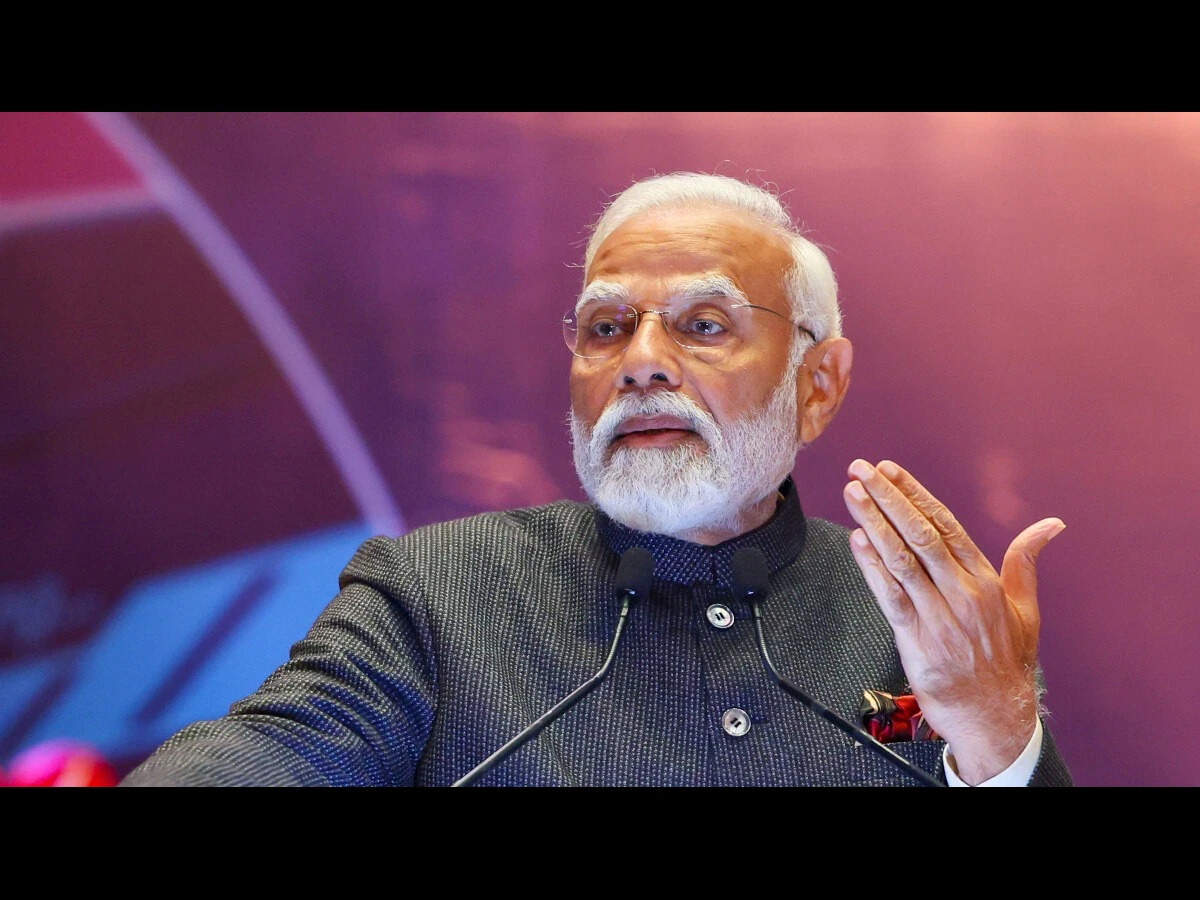
New Delhi: When Prime Minister Narendra Modi addresses the 57th convocation of IIT Delhi on Saturday, the event will be watched for more than the medals, degrees and customary graduation message. Nearly two months after the NEET-UG 2026 paper leak controversy triggered one of the biggest crises of confidence in India’s examination system, the Prime Minister will once again be speaking before a large gathering of students, making the occasion significant for the education sector even though the convocation itself has no connection with the controversy.According to IIT Delhi, the Prime Minister will address more than 3,000 graduating students, including 587 PhD scholars, present the institute’s top honours, and remotely inaugurate Param Pragya, an AI-powered high-performance supercomputing facility at the Sonipat campus. Union Education Minister Pralhad Joshi and NITI Aayog member Prof. Abhay Karandikar will also attend the ceremony.
On the face of it, the event is centred on research, innovation and technology. IIT Delhi has highlighted its new collaboration with 18 National Institutes of Technology (NITs), expansion of international partnerships, research funding, patents, licensing activity and AI infrastructure as key milestones ahead of the convocation. The institute’s press material makes no reference to the NEET-UG controversy, nor does it suggest that the event has been designed around recent developments in the examination ecosystem.
Yet, the timing makes the address noteworthy.
The NEET-UG paper leak controversy transformed education into one of the country’s biggest political and policy debates. It raised serious questions about the credibility of high-stakes examinations, prompted nationwide protests, led to changes in the leadership of the education ministry, and resulted in a series of government measures aimed at strengthening examination security and restoring public confidence.
Since then, the Prime Minister has communicated on the issue through statements and video messages. What he has not done, however, is address a large in-person gathering of students. As a result, the IIT Delhi convocation becomes the first major opportunity for him to speak directly to a student audience after the controversy, even though there has been no indication that his speech will refer to NEET or examination reforms.
For education-sector observers, that distinction matters.
The audience at IIT Delhi is not the cohort affected by the NEET-UG examination. It comprises graduating engineers, researchers and postgraduate students preparing to enter academia, industry and entrepreneurship. Nevertheless, any reference to examination integrity, institutional trust or education reforms would inevitably attract attention because of the wider national context.
At the same time, the government may choose to focus entirely on a different narrative. IIT Delhi’s own achievements provide ample scope for such a message. The institute reported about ₹600 crore in sponsored research and consultancy during FY 2025-26, an intellectual property portfolio of 1,871 assets, 88 active international MoUs across 30 countries, and continued investments in research infrastructure and global collaborations. The inauguration of the AI-powered Param Pragya supercomputing facility further reinforces the government’s emphasis on artificial intelligence, deep-tech research and innovation-led growth.
What to watch in the Prime Minister’s address
Education leaders and policymakers will closely watch three aspects of the speech:
- Whether the Prime Minister makes any reference to examination integrity, paper leaks or restoring trust in public examinations.
- Whether the address focuses exclusively on research, artificial intelligence, innovation and India’s global higher education ambitions.
- Whether the speech offers any broader policy signals on the future direction of higher education and youth development.
The convocation itself was scheduled independently of the NEET-UG controversy, and IIT Delhi has framed it as a celebration of academic achievement and technological progress.
Even so, in a year when examination reforms have dominated the education discourse, every major address to students carries added significance. Whether or not Prime Minister Modi mentions NEET, his remarks at IIT Delhi are likely to be viewed through the lens of the government’s continuing effort to restore confidence in India’s education and examination ecosystem.
