
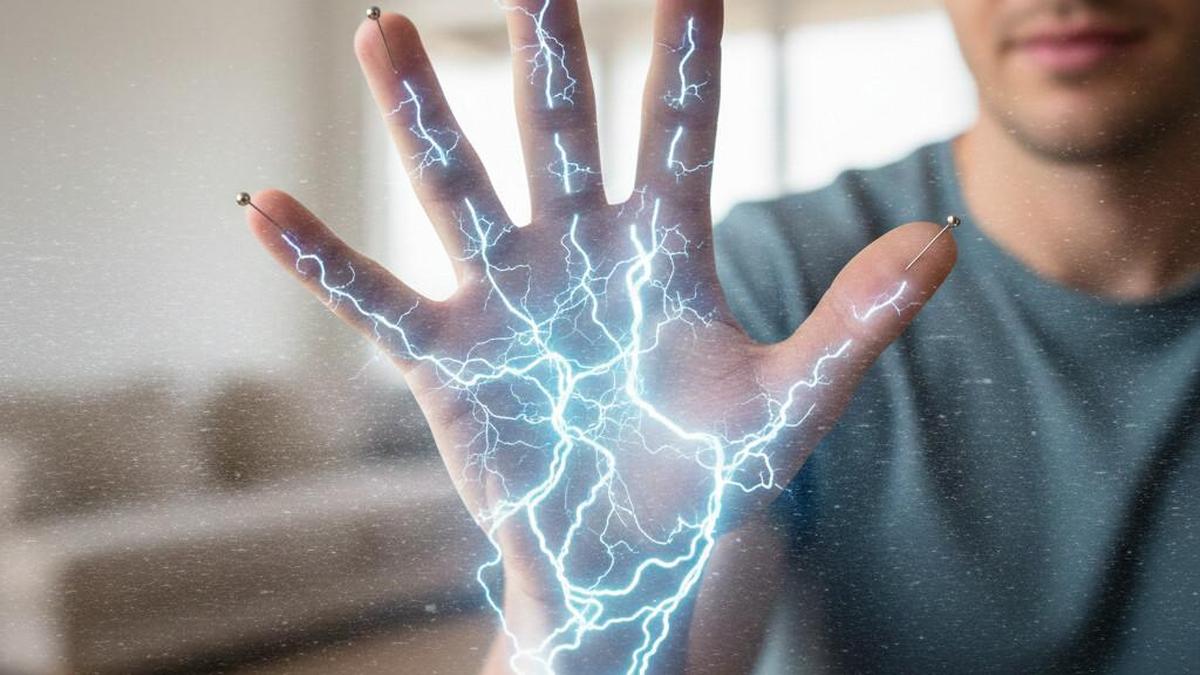
Paresthesia
| Photo Credit: Gemini DALL E
Paresthesia, or sleeping limbs, is characterised by a numb, tingling, or a slight burning sensation in your limbs that usually affects hands, arms, and feet. It can also affect joints, pressure points and areas close to a nerve.
Science it out
So, how does this happen? Well, when you put pressure on a limb for too long — like sitting cross-legged for too long, sleeping on one arm, leaning on one elbow, or holding a phone or book in one position — this leads to temporary nerve compression or slowed down blood flow. When you finally remove pressure, nerves fire rapidly as they “restart”. The brain will interpret this as a pins-and-needles sensation. The sensation fades soon after movement continues.
It is also caused by bumping something (like your elbow) which can lead to a sharp, shooting-like feeling. That’s known as “hitting your funny bone,” or the ulnar nerve.

Paresthesia
| Photo Credit:
Gemini DALL E
‘Underlying’ causes
Based on what causes paresthesia, there are two types of it: transient (temporary) and persistent.
Transient paresthesia is more common, and is often short-lived. It is caused by pressure on the limbs released after long hours. Some other causes include:
-
Dehydration
-
Hyperventilation
-
Migraines, and
-
Panic attacks
However, persistent paresthesia can be a sign of more serious conditions, like brain tumours, strokes, low blood sugar or thyroid function, vitamin deficiency, or autoimmune or inflammatory diseases.

Paresthesia
| Photo Credit:
Google AI
Prevention
Temporary paresthesia can be fixed by changing postures more frequently. Stretch as often as possible and avoid putting too much pressure on your limbs. Of course, should it be persistent, you might want to see a doctor. It could be an underlying sign of a life-threatening condition.
Limbs don’t “fall asleep” in the true sense, your nerves are just squashed temporarily. Your body is essentially telling you to get up and get a move on. In most cases, it is an easy to prevent condition, but in rare cases, you’re being warned of something more serious. Either way, it’s just another quirky way for your nerves to send signals.
Published – February 03, 2026 02:58 pm IST